Underdrawing
decides everything.A website is won or lost in the plan, not the paint.mitgeurim is a web studio in Seoul, South Korea. We plan, design and build brand websites end to end — one person on your project from the first call to launch day.
What we can prove.Only what you can check right now
No invented metrics, no borrowed logos.
Eight sites we drew ourselves, all live and open to you.
- Built in-house Eight sites, planned, designed and built by this studio. Every one of them is live and you can open it right now.
- Range Lighting · hanok stay · apartment renovation · cat café · dog café · analogue synthesiser · streetwear · industrial roboticsFrom quiet hospitality branding to B2B industrial — opposite ends of tone, drawn to the same standard.
- How we build Static sites that load fast and rarely break · mobile first · search and AI-answer (AEO) setup and real-device checks are part of launch, not an upsellTwo of the eight (NEPER, ONDO) are English-language sites.
- Who you work with The person who takes your first call plans it, draws it, and stays on it until launch.Seoul, South Korea (KST, UTC+9). We work with clients abroad in English, in writing.
- The name Mitgeurim (밑그림) is the Korean word for an underdrawing — the sketch beneath a painting. We believe the quality of the finished work is decided there, not in the brushwork.
-
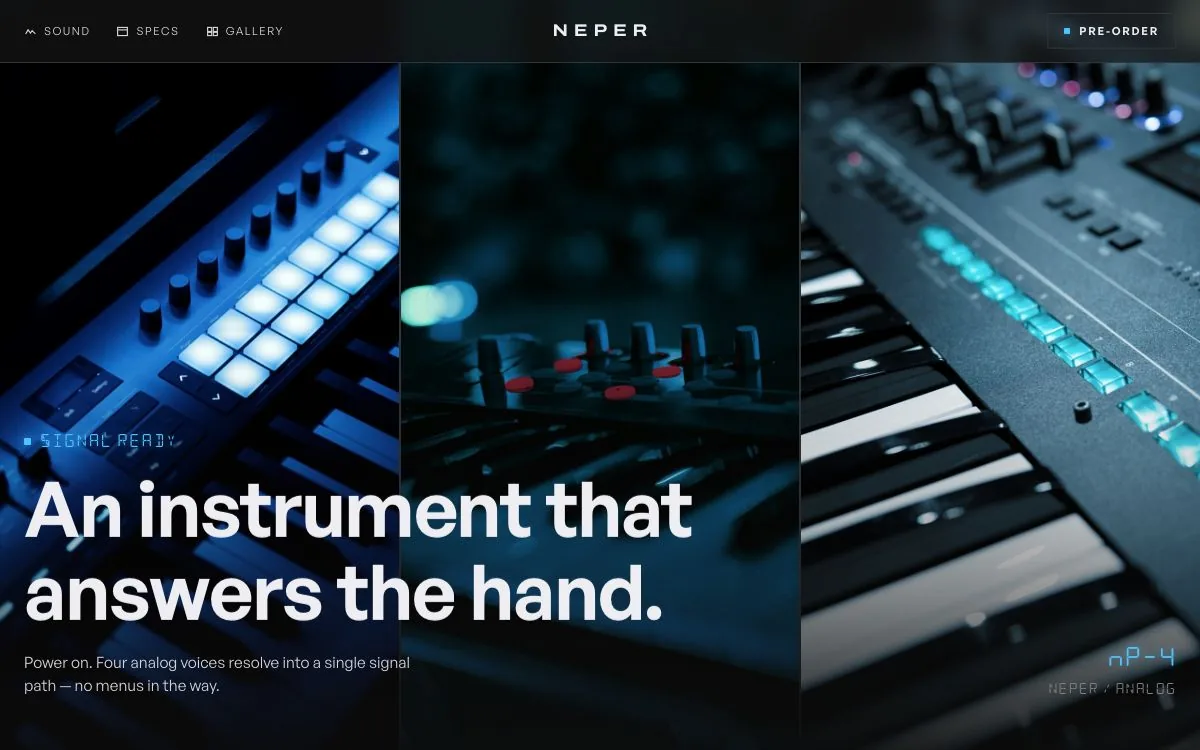
NEPER
Analogue synthesiser (concept brand)An instrument that answers to your hands — and a page that lets you feel it before you ever touch one.
Open the live site ↗ (opens in a new window) -
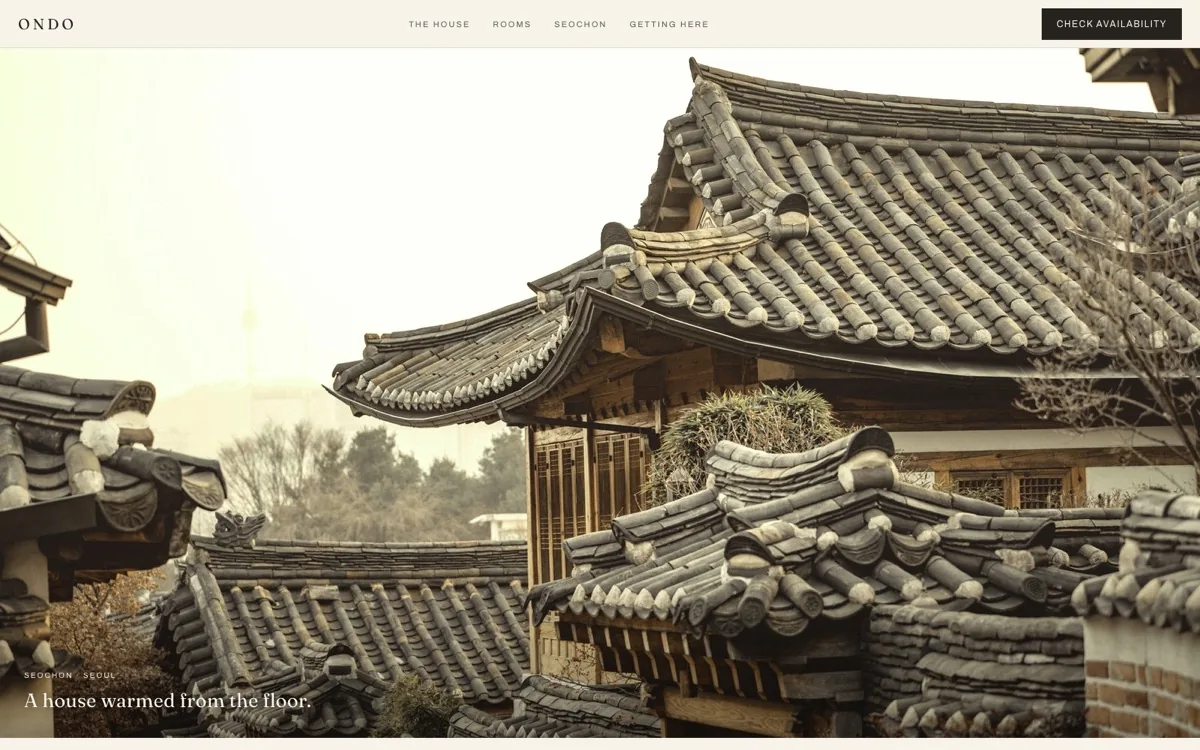
ONDO
Boutique hanok stay, Seochon, Seoul (concept brand)One warm night inside a cold city — the page warms up as you scroll, so guests feel the temperature before they book.
Open the live site ↗ (opens in a new window) -
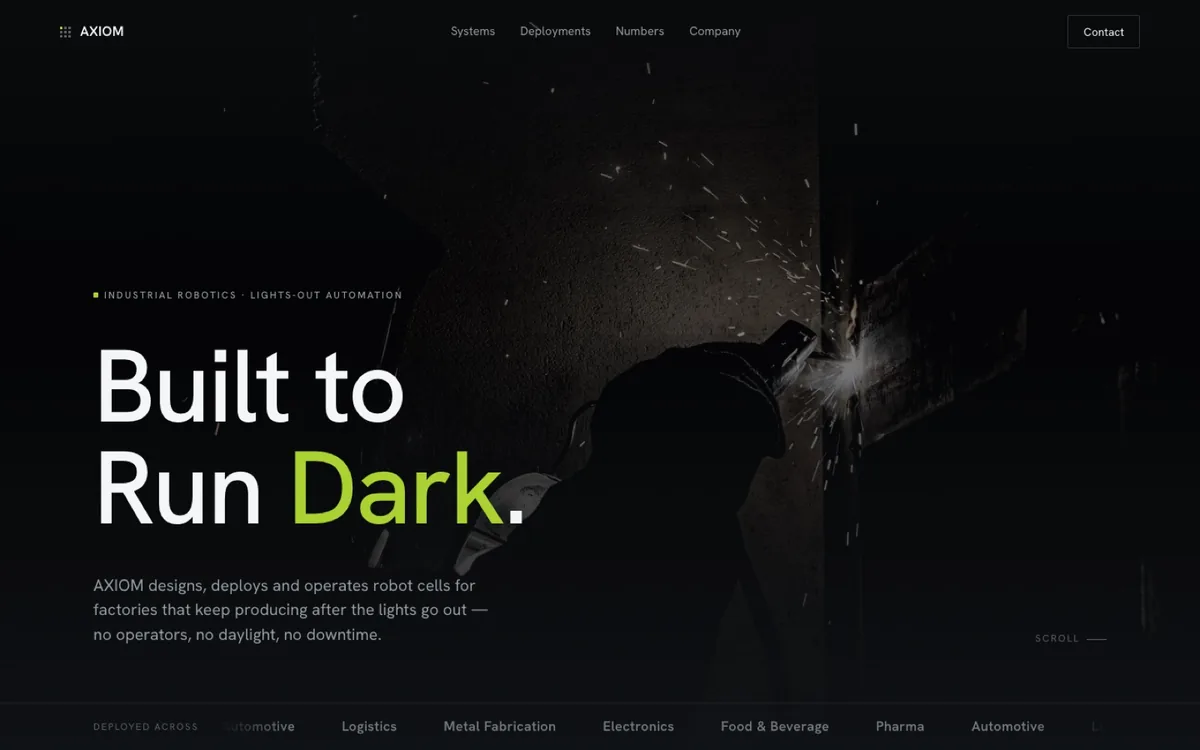
AXIOM
Industrial robotics (B2B)A factory that runs 24 hours with the lights off — buyers read the scale of it by scrolling.
Open the live site ↗ (opens in a new window) -
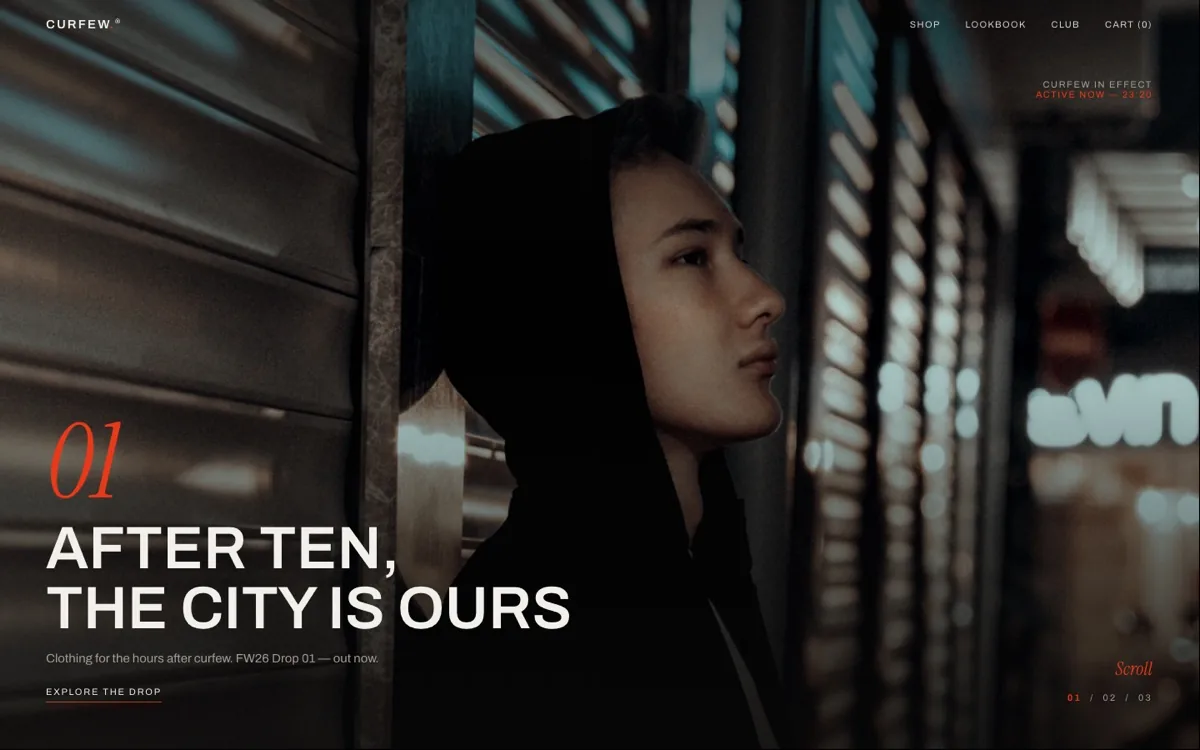
CURFEW
Menswear streetwear labelA world that only opens after 10pm — and a site that switches into it depending on when you arrive.
Open the live site ↗ (opens in a new window)
All eight, with the reasoning behind each one — see the full portfolio ↗ (in Korean)
Where are you now?Pick the one that sounds like you
We'll tell you what has to be decided first in that situation — before anyone opens a design tool.
A new brand's site isn't there to be checked. It's there to convince. Most visitors are meeting you for the first time on that screen, and they decide what you sell, why it costs that, and whether you're real — all in one sitting.
So the first decision isn't colour, type or references. It's who this screen is for, and what that person should do before they leave. Skip those two lines and every decision after them turns into an argument about taste.
You redesigned, people said it looked great, and the enquiry count didn't move. That isn't a design problem. It's that nothing on the site tells a visitor what to do here.
One answer on the first screen, one action per page, and the proof sitting directly in front of the button. All three are usually fixable without tearing the design down — worth checking before you pay for another rebuild.
Nobody is telling you to quit Instagram. But there are jobs a feed structurally cannot do.
Being found by search and by AI answers. Showing information in the order a visitor wants it, not the order you posted it. Keeping your proof in one place instead of letting it sink under newer posts. A feed flows, which is what feeds are good at; a site holds, which is what you need next.
Promises, not numbers.We'd rather show you how we work than quote a statistic
Three promises instead of inflated claims. All three go into the contract, word for word.
-
One flow.
One person, start to finish
Call, plan, design, build and launch stay with the same person — nothing gets lost in a handover.
-
Nothing invented.
Nothing invented on screen
No fake reviews, no inflated numbers. Trust only holds if it's built from real material.
-
Scope in writing.
Scope written down
Revision rounds, schedule and handover are fixed in the contract before we start.
- 01First callYour situation and your goal. We'll say so plainly if you don't need a site yet.
- 02The underdrawingVisitor path and core message, drawn before any visual work. This step decides the result.
- 03Design directionWe settle the first screen for your market and your buyer before moving on.
- 04BuildStatic, fast, hard to break. Mobile first.
- 05Checks and launchReal devices, search and AEO setup, domain connection.
- 06After launchChanges handled within the agreed policy; ongoing maintenance if you want it.
If that's how you'd like to work — start a project ↗
Before you decide.The three questions we get most
-
How long does a site take?
It depends on scope — usually two to three weeks for a single-page site, three to four for a multi-page one.
The schedule is fixed during planning, before build starts. -
How many revisions do we get?
The number of included revision rounds is written into the contract.
Unlimited free revisions serve neither side, so we agree the scope openly instead. -
What happens after launch — is it hard to maintain?
It's a static site, so it's fast and rarely breaks.
The domain and hosting are handed over in your name, and we can stay on for maintenance if you want.
Scoped, then quoted.Tell us the scope and we'll send a written quote
Two projects both called "a website" can differ several times over in work.
So there's no price list here — every project gets its own quote.
Send us these three things and you'll get a written quote with scope, schedule and cost. We can also work them out together on the first call.
- 01What the brand doesYour market, and what material you already have — photography, copy, an existing site.
- 02What a visitor should doBook, enquire, buy, request a deck. Everything else follows from picking one.
- 03When it has to be liveYour launch date, plus any sites you'd like us to look at as reference.
Your project?The next underdrawing is your brand
Email us directly
Tell us what you're building and roughly when it has to be live.
You'll get a real answer, not a brochure — including "you don't need this yet" if that's the honest one.